
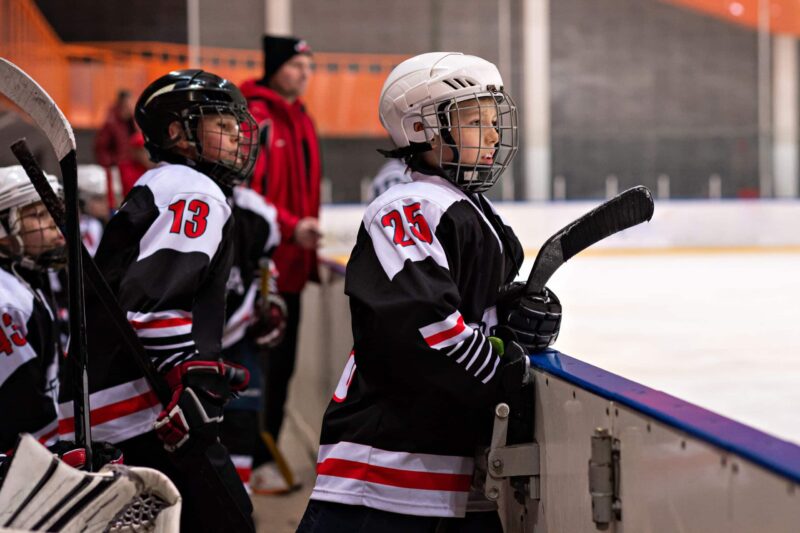
Injury happens all too often when young athletes are anxious to jump into training with little to no preparation. While that enthusiasm is exciting, skipping the fundamentals can put growing bodies at a greater risk for injury.
At The Edge Sports Center, our goal is to teach young athletes these skills early in life through our youth hockey program. These skills don’t just promote muscle growth during puberty, but it also benefits them in the long run as they’re more likely to carry these abilities well into adulthood
Why Are Flexibility and Mobility Important?
Although they’re often used interchangeably, flexibility and mobility each play an important role in athletic development, and they work best together.
Flexibility refers to a muscle’s ability to lengthen, while mobility is the ability to move a joint through its full range of motion with control. Together, they improve movement quality, making everyday and athletic activities such as bending, reaching, twisting, sprinting, and jumping feel easier on the body.
Regular flexibility and mobility training can also:
- Increase range of motion
- Reduce muscle tension and everyday stiffness.
- Improve circulation and blood flow to working muscles.
- Increase synovial fluid around the joints, helping them move more smoothly.
- Place less stress on muscles while exercising.
- Improve physical movement efficiency, helping athletes to perform with less effort and more energy.
Many flexibility and mobility exercises can be incorporated into warm-ups, cool-downs, or activities like yoga.
Dynamic vs. Static Stretching: What’s the Difference?
Stretching isn’t one-size-fits-all. Different types of stretching serve different purposes depending on when they’re performed. You should use dynamic stretching before exercise and static stretching after exercise for the following reasons…
Dynamic Stretching
Before jumping into exercise, it’s best to warm up the body through dynamic stretching; a controlled active movement. These movements gradually increase heart rate, warm up the muscles, and improve mobility before activity begins.
Examples include:
- Walking lunges
- High knees
- Leg swings
- Arm circles
Static Stretching
After your exercise, your body now needs a cooldown time to prevent sore muscles or stiff joints. This involves holding a stretch for 20–30 seconds to lengthen the muscles, slow the heart rate, and control your breathing.
Examples include:
- Seated hamstring stretch
- Standing quadriceps stretch
- Calf stretch
- Cross-body shoulder stretch
Five Warning Signs of Overtraining
Recovery and rest days are just as important as training. Young athletes may begin to show the following signs of overtraining…
1) Soreness
2) Fatigue
3) Irritability
4) Lack of Enthusiasm
5) Frequent Injuries
If this sounds familiar, it may be time to reevaluate the athlete’s training schedule and prioritize proper recovery.
Build Healthy Habits Through Youth Hockey Program
At The Edge Sports Center, our youth hockey program helps young athletes build a strong foundation through proper movement, flexibility, mobility, and recovery. Under the guidance of Coach Adrien Peacock, a Certified Strength and Conditioning Specialist, students learn the fundamentals of injury prevention while developing the strength, coordination, and confidence required to succeed in their sport.
Whether your child is just getting started or looking to take their performance to the next level, our sport-specific programs are designed to help every athlete reach their full potential.
Contact The Edge Sports Center today to learn more about our youth hockey program and learn how proper training and recovery can help young athletes perform their best both now and in the future.